


Liver Cancer Breakthrough: Untapped Potential in Combining Approved Drugs with Dietary Changes
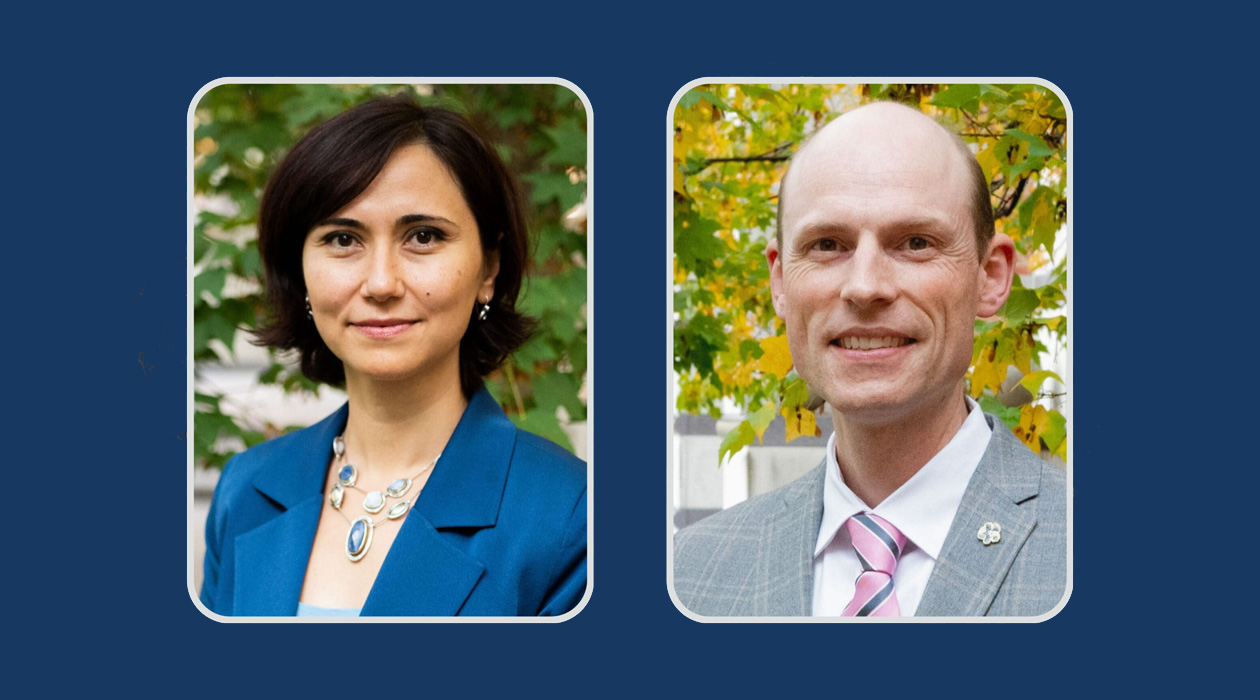
Zeynep Madak-Erdogan (left) and Erik Nelson / Cancer Center at Illinois

Share
Liver metastases are one of the most common sites of cancer spread, and the survival rates are very low. However, Cancer Center at Illinois (CCIL) researchers recently identified a new promising therapeutic target.
Sylvia D. Stroup Scholar and Professor of Food Science and Human Nutrition Zeynep Madak-Erdogan (CGD/EIRH), Professor of Molecular and Integrative Physiology Erik Nelson (ACPP), and their team found that metastatic liver tumors rely on a protein called ACSS2 to use acetate, which can help them develop. This discovery could lead to new strategies, such as combining existing drugs with dietary changes.
“The liver is the first organ that is exposed to any kind of nutrients, chemicals that come from our guts. Whenever we eat something, the first place it goes is the liver. That’s what makes this liver metastatic system quite interesting for us, as we can combine dietary or metabolic interventions with currently available drugs,” said Madak-Erdogan.
One of the currently available drugs is called Fulvestrant. Unfortunately, tumors often develop a resistance to this drug. This is particularly an issue when the cancer has spread to the liver, where Fulvestrant doesn’t work well at all.
“This research has found one potential Achilles heel to those liver metastases—a protein called ACSS2. This is important since ACSS2 may represent a new drug target to treat these resilient tumors,” said Nelson.
The team was dedicated to identifying proteins that are relevant to what we eat, as this opens up new doors for diet-related therapies. By combining different treatments, researchers can hopefully provide more options for patients. “We are looking for ways to improve survival as well as quality of life for these patients. That’s what started us at the beginning,” said Madak-Erdogan.
Having an array of therapies is helpful because it gives patients more agency in their treatment. “It’s exciting to find ways to improve therapy responsiveness, not just by drugs, but also by diet or lifestyle interventions, because these are treatments patients can employ in their daily life,” said Madak-Erdogan.
The next steps for this team involve two different directions, one concerning acetate and the other concerning the liver metastatic cells.
“We are interested in studying where the acetate is coming from and how it links to the gut microbiome,” said Madak-Erdogan. “The other direction is to understand what’s special about liver metastatic cells. We are trying to develop human organoid models to better study the system in a more human relevant environment.”
***
Zeynep Madak-Erdogan is the Cancer Center at Illinois Associate Director for Education. She also is affiliated with Nutritional Sciences, Biomedical and Translational Sciences, and the National Center for Supercomputing Applications.
Erik Nelson is the Keith W. and Sara M. Kelley Professor in the Department of Animal Sciences, Cancer Center at Illinois Program Leader and an affiliate of the Beckman Institute for Advanced Science and Technology.
This research is reported in the paper “ACSS2-mediated metabolic-epigenetic crosstalk drives Fulvestrant resistance and represents a novel therapeutic target” and is available online.