


Scaling African biodiversity genomics and bioinformatics to achieve the Kunming-Montreal Global Biodiversity Framework
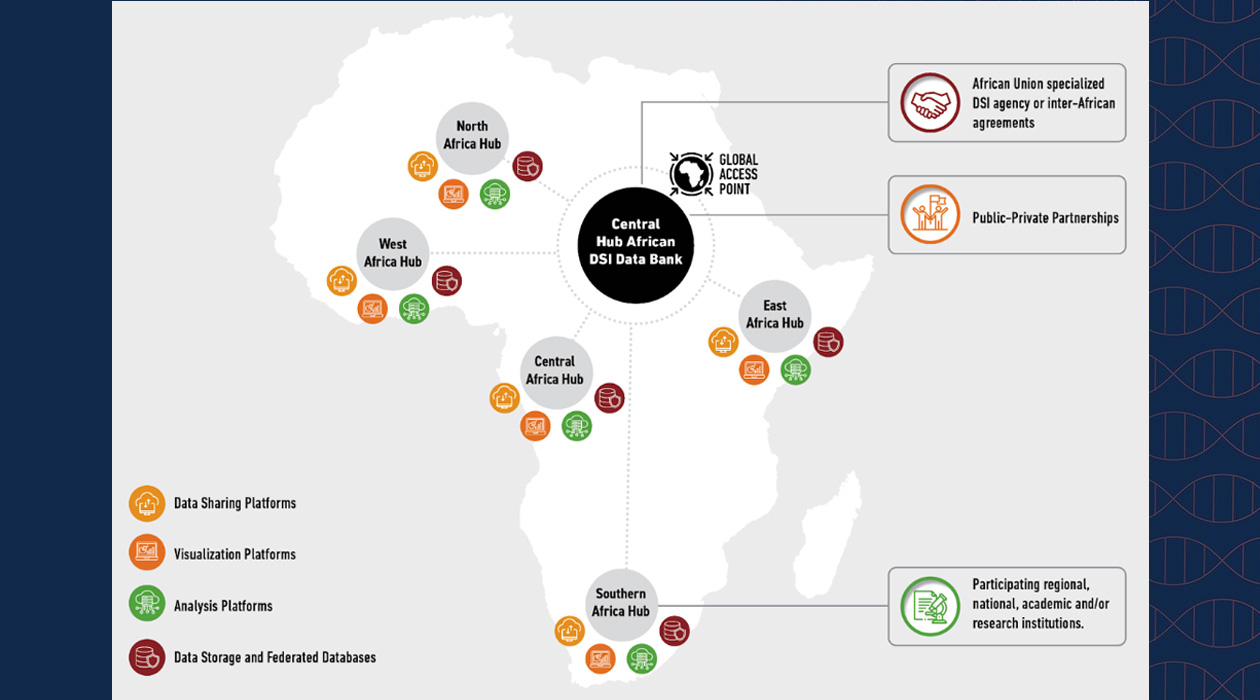
African BioGenome Project proposed Digital Sequence Infrastructure roadmap to enable Africa implement the Kunming-Montreal Global Biodiversity Framework

Share
The African BioGenome Project (AfricaBP), an ambitious Pan-African initiative, in alignment with the Kunming-Montreal Global Biodiversity Framework (KMGBF), is advancing large-scale genomic and bioinformatics efforts across the African continent. Through this initiative, AfricaBP is pioneering innovative strategies to mitigate biodiversity loss while ensuring equitable sharing of benefits derived from genetic resources.
This endeavour, however, requires Ethical, Legal, and Social implications (ELSI) underpinned by coordinated policy and regulatory frameworks and Digital Sequence Information (DSI) infrastructures. Recognizing these challenges, a recent publication in the journal, Nature Reviews Biodiversity, Expanding African biodiversity genomics to meet global biodiversity goals (https://doi.org/10.1038/s44358-026-00143-3), highlights challenges and opportunities associated with meeting the objectives of KMGBF across Africa, while proposing the integration of the AfricaBP developed theory of change to support these implementations.
“Africa continues to demonstrate leadership in advancing Access and Benefit-Sharing (ABS) and driving innovation on digital sequence information (DSI). As Parties work toward implementing the Multilateral Mechanism and the Cali Fund under Decision 16/2, strengthening scientific infrastructure and capacity across Africa will be essential to achieving fair and equitable benefit‑sharing and delivering on the Kunming–Montreal Global Biodiversity Framework”, said Astrid Schomaker, Executive Secretary, Convention of Biological Diversity (CBD), United Nations Environment Programme (UNEP), Montreal, Canada
“Equity in DSI benefit-sharing cannot be built on incomplete provenance data. Even where ‘country of origin’ metadata exists, it is often missing at scale, so heavy weighting of geographic origin risks systematically under-allocating benefits to megadiverse countries. Allocation should use proxies and safeguards, prioritize capacity gaps, and protect LDC floors. Critically, at least 50% of resources must reach Indigenous Peoples and Local Communities through direct, self-determined channels, not bureaucracy”, said Ermiyas Yeshitla, Lawyer and Researcher, Genetic Resource Access and Benefit sharing Research, Ethiopian Biodiversity Institute, Addis Ababa, Ethiopia.
Theory of Change: Five key opportunity areas
The article outlines a theory of change focusing on five key opportunity areas, providing clear recommendations, potential outcomes, and challenges, namely:
- Legal and ethical frameworks where there are shortages of clear and comprehensive frameworks across Africa (see Figure 1)
- Genomics and Digital Sequence Information (DSI) infrastructures, including the imbalance in using, studying, generating, and storing DSI data (e.g. genomics data) within Africa (see Figure 2)
- Inclusion and gender imbalance of DSI researchers in the DSI field, especially under-representation
- Conflicting priorities between biodiversity conservation, poverty alleviation, and sustainable development
- The importance of planning, transparency, accountability, monitoring, review, and reporting for the successful implementation of the KMGBF
“AfricaBP is building an Africa-led genomics future where data sovereignty, robust DSI infrastructure, and ethical governance are non-negotiable, so KMGBF goals become measurable conservation outcomes, and the benefits flow back, fairly and transparently, to African countries and communities. This ensures that Africa’s biodiversity and genomic integration translates to real value for its people rather than becoming an extractive science”, said Prof. Bouabid Badaoui, Chair of the AfricaBP and Professor at Mohammed V University in Rabat, Morocco
“Biodiversity holds immense value, especially in Africa, where ecological richness is intertwined with cultural heritage. The Ethical, Legal, and Social Implications (ELSI) of sampling and biobanking demands compliance with frameworks such as the Nagoya Protocol, respecting indigenous rights, ensuring equitable benefit-sharing, and maintaining transparency in research practices. As we explore Africa’s genetic resources, it’s crucial to uphold ethical standards that protect both biodiversity and the communities that depend on it”, said Kim Labuschagne, Wildlife Biobank Curator, South African National Biodiversity Institute (SANBI), Pretoria, South Africa
While there are several challenges, the recommended solutions described by the AfricaBP ELSI subcommittee are within reach for many African countries, especially considering there are successful models in place already on the continent and globally. For example:
- The Biodiversity Passport in South Africa to address challenges with transparency, monitoring, and mainstreaming on access to genetic resources and DSI
- Global Alliance for Genomics and Health Passports (GA4GH) and the Cryptography for Genomic Health file container format developed by GA4GH
- The African Union’s Strategy for Gender, Equality, and Women’s Empowerment is an example of a gender-first strategy to tackle inclusion and gender under-representation
- Some African countries already promote in-country capacity to generate, analyse, and use genetic resources and DSI through non-commercial, in-country access to genetic resources by removing additional layers of permit requirements such as export permits, zero permit application fees, and/or material transfer agreements, respectively, compared to commercial and out-of-country access and use.
“Sustainable biodiversity conservation through innovative scientific approaches is rooted in the availability of relevant data for such innovations and sharing of resulting benefits. Our goal is not only to enable biodiversity genomic innovations across Africa by making such data available, but to ensure that its benefits are distributed fairly, equitably, and sustainably. To unlock sustainable breakthroughs across Africa and globally, the quest for data sharing should be accompanied by the same quest to share the arising benefits; the attention and resources committed to improving data sharing should match the attention and resources committed to improving benefit-sharing. To be effective, true data sharing, biodiversity conservation, and scientific innovations through genetic resources and DSI only exists where (and when) there is equitable benefit sharing”, said Dr. ThankGod Echezona Ebenezer, Founder and Co-Chair, African BioGenome Project
Furthermore, AfricaBP integrates a theory of change approach across its activities to strengthen the implementation of the KMGBF through initiatives such as enhancing biodiversity data infrastructure, promoting awareness of benefit sharing, and fostering collaboration through roundtable discussions, surveys, and community engagement. As AfricaBP scales up its efforts, its comprehensive strategy is poised to drive transformative change and deliver lasting impact in biodiversity conservation, food security, benefit and data sharing across the African continent.
The AfricaBP kindly ask all African organisations and international partners to join us in delivering this roadmap. To kickstart the implementation of its roadmap, the AfricaBP is launching the 1st African Congress on Digital Sequence Information (DSI), Infrastructure and Policy (African Congress on DSI) to power African DSI Infrastructures through deeper policy discourse. The African Congress on DSI will happen four times a year across all five African geographical regions, starting with West Africa in May 2026 (see initial announcement for more information): https://www.linkedin.com/posts/african-biogenome-project_we-are-launching-1st-african-congress-on-activity-7383856047234600960-O5QK/
The African BioGenome Project (AfricaBP) is a coordinated pan-African effort to build capacity (and infrastructure) to generate, analyze, and deploy genomics data for the improvement and sustainable use of biodiversity and agriculture across Africa. The AfricaBP is an affiliated project partner of the Earth BioGenome Project, Vertebrate Genomes Project, and the 10,000 Plants Genome Project, and a partner of the Science for Africa Foundation.