


Cancer Center at Illinois Earns Prestigious National Cancer Institute Designation
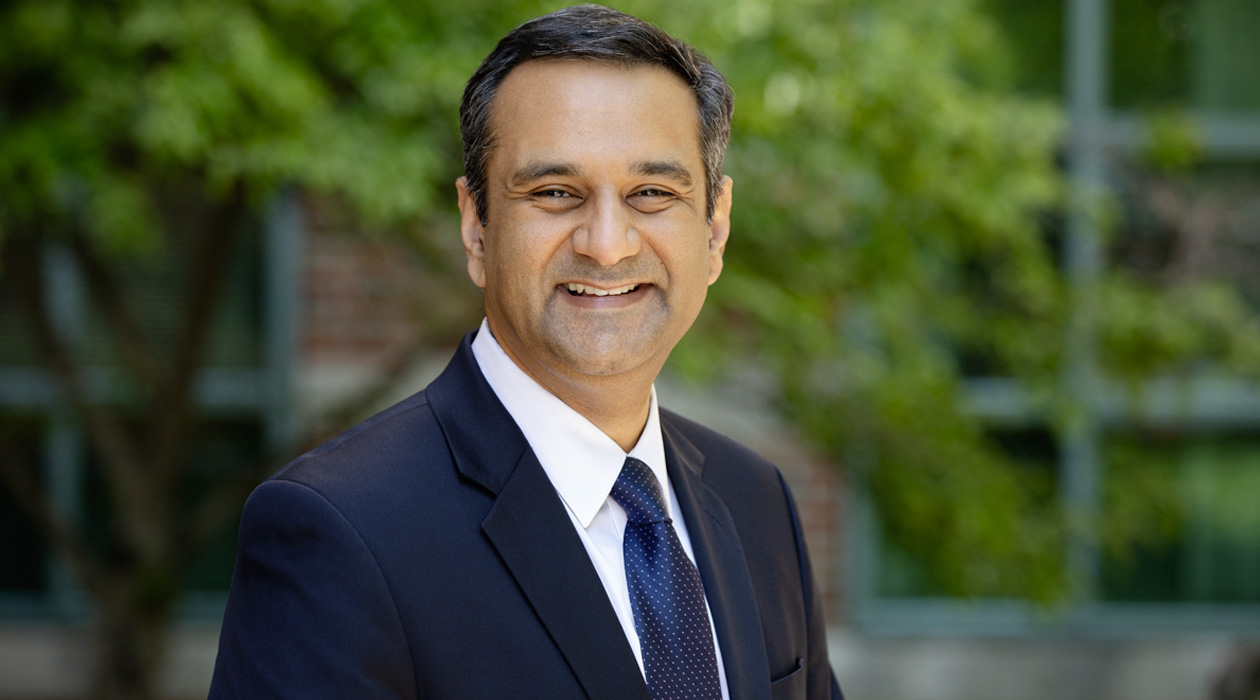
Phillip and Ann Sharp Director Rohit Bhargava / L. Brian Stauffer

Share
The Cancer Center at Illinois (CCIL) announced it has been designated as a Basic Cancer Center by the National Cancer Institute (NCI). This national recognition places CCIL among the nation’s most elite cancer research institutions and affirms the University of Illinois Urbana-Champaign’s excellence in merging oncology, engineering, and basic science.
“This designation recognizes the unique approach of the University of Illinois Urbana-Champaign to transforming healthcare and is a moment of celebration for our entire community,” said Rohit Bhargava (CGD), the Phillip and Ann Sharp Director of the Cancer Center at Illinois. “It affirms the quality of our research and the unwavering commitment of our members to transform how we understand, detect, and treat cancer. As a Basic Cancer Center, we are training a new generation of scientists to use cutting-edge topics such as AI, deepening collaborations with clinical centers, and contributing innovative, paradigm-changing research that seeks to help people overcome cancer.”
Rather than treating patients, Basic Cancer Centers focus on the discovery and development of innovative approaches to cancer detection, treatment, and prevention. This milestone marks the first new Basic Cancer Center designation in nearly 40 years, underscoring CCIL’s national significance. Of 74 NCI-designated cancer centers nationwide, CCIL will be only the eighth center recognized as a Basic Cancer Center, and the only one in Illinois, highlighting the university’s leadership in interdisciplinary cancer research.
“With NCI designation, the Cancer Center at Illinois will continue to accelerate interdisciplinary research and collaborative innovations that bring hope to patients and families everywhere,” said Chancellor Charles L. Isbell, Jr. “This achievement reflects our enduring commitment to discovery that improves lives, and we look forward to Illinois leading this life-saving work for generations to come.”
The CCIL was founded in 2011 by a small group of faculty who believed that engineering and the use of modern science and technology could transform cancer research. Over the years, this innovative approach has grown into a cross-disciplinary collaborative of more than 125 faculty members and hundreds of trainees. At the CCIL, engineers, biologists, behavioral scientists, chemists, and computational experts work together to advance understanding of cancer and accelerate innovation that can ultimately ease the burden of the disease. CCIL advances are applied not only to humans but also to our pet cats and dogs. By learning from how we treat our pets, CCIL researchers are improving therapies for humans.
“Illinois is home to world-class medical research institutions, especially the Cancer Center in Urbana — a pioneer in the field of cancer engineering. With this new and well-deserved national designation, that I was proud to support, the University of Illinois is being recognized for its high-caliber medical researchers,” said Senator Dick Durbin. “As we look toward new diagnostics, treatments, and ultimately a cure for cancer, the Cancer Center at Illinois will be at the forefront of our efforts to innovate and enhance life-saving care for patients facing cancer.”
“This announcement is a tremendous milestone for the university and for the entire region. Receiving a National Cancer Institute designation is a testament to the incredible work of the researchers, clinicians, and staff who have dedicated themselves to fighting cancer and saving lives,” said Congresswoman Nikki Budzinski. “This recognition will expand access to critical funding, accelerate groundbreaking clinical trials, and most importantly, improve outcomes for patients across our community. I’m so proud to represent the university and to have led the delegation, alongside our Senators, in advocating for this designation in our letter to the NCI. I’m excited to see this effort over the finish line and look forward to the lasting, life-saving impact it will have on families across Central Illinois.”
NCI designation represents the culmination of more than a decade of investment and collaboration and creates new opportunities to transform CCIL’s fundamental discoveries into real-world impact – advancing the university’s mission to serve the state, the nation, and the world.
The designation provides the CCIL with multi-year support to expand research capacity, increase collaboration with other centers, and accelerate the translation of laboratory findings into medical use. The designation also strengthens CCIL’s potential to contribute its engineering and scientific expertise and innovations to other cancer centers. Some examples of these innovations are new magnetic resonance spectroscopic imaging technology that can monitor the effectiveness of treatments, molecular measurement technology to detect cancer through a simple blood test, laboratory mimics of human cancers so that personalized therapies can be developed, new imaging to diagnose cancer using artificial intelligence, and new drugs that promise faster and safer treatments. These advances are poised to reshape how cancer is detected, monitored, and treated worldwide.