


M-CELS research featured on cover of ACS Applied Materials and Interfaces
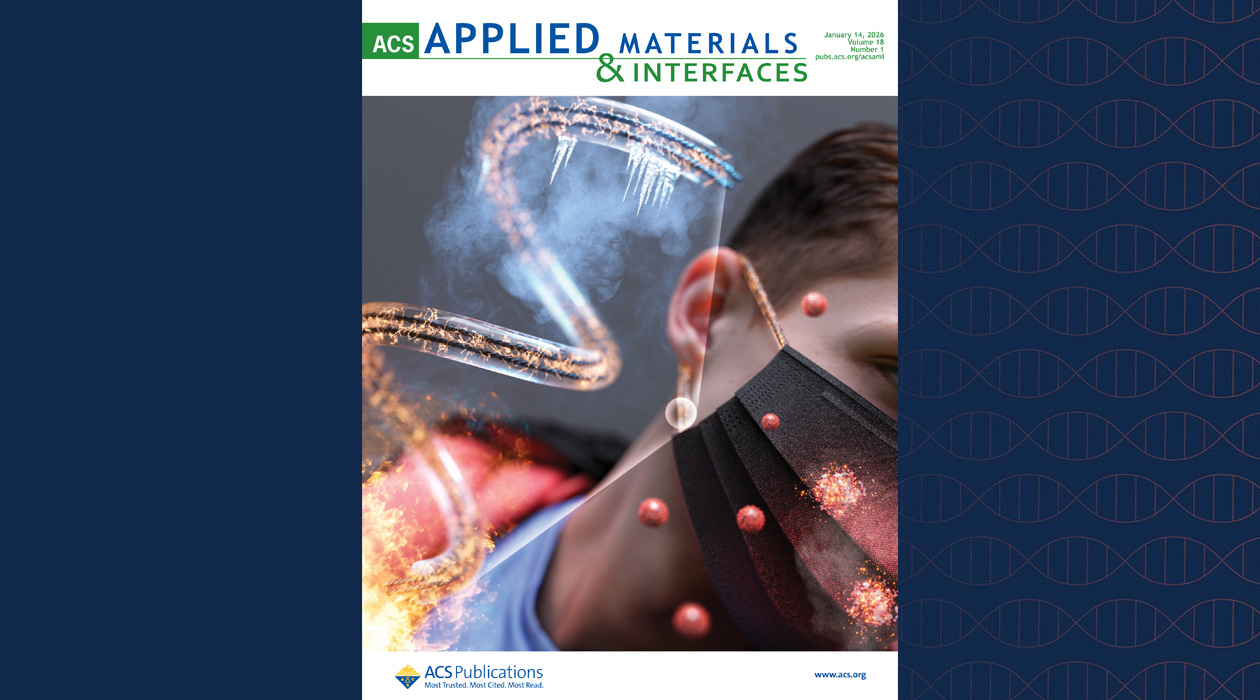
The cover of Volume 18, Issue 1 of ACS Applied Materials & Interfaces features research from the Multi-Cellular Engineered Living Systems theme.

Share
The publication "Ambient-Stable and Resilient Glycerogel Electrolytes for Flexible Solid-State Supercapacitors" from the M-CELS theme was the featured paper for the cover image of this edition of ACS Applied Materials & Interfaces.
"Hydrogel electrolytes are increasingly used for flexible solid-state supercapacitors emerged as promising power sources due to their similarity to aqueous electrolytes. However, their performance is limited by evaporation or freezing in challenging weather, restricting their practical applications. This study introduces a flexible glycerogel electrolyte with antidrying and antifreezing properties, offering exceptional durability under harsh conditions. Inspired by the role of glycerol and electrolytes in electrodermal activity of biological tissue, eco-friendly NaCl and hygroscopic glycerol are incorporated into a stretchable hydrogel matrix. The resulting glycerogel electrolyte retained hydration in the open air for 180 days. It also exhibited stable conductivity under extreme temperatures (−20 to 60 °C) and low-pressure conditions (∼2.4 kPa). A fibrous solid-state supercapacitor assembled using carbon nanotube yarns delivered a maximum gravimetric capacitance of 148 F·g–1 at 0.5 A·g–1. Notably, the device maintained 94%, 86%, and 90% of its initial capacitance after 30 days of exposure to −20 °C, 60 °C, and low-pressure conditions, respectively, without encapsulation. To demonstrate practical utility, this fibrous supercapacitor was integrated into the ear loop of a facial mask, enabling heat-induced sanitization that killed 99.999% of bacterial cells. This glycerogel electrolyte provides a sustainable, versatile solution for powering future wearable electronic devices across diverse environmental conditions."
Read the full publication here: https://pubs.acs.org/doi/10.1021/acsami.5c19785