


Spatial Mapping Technique Allows Researchers to Understand Tumor Architecture
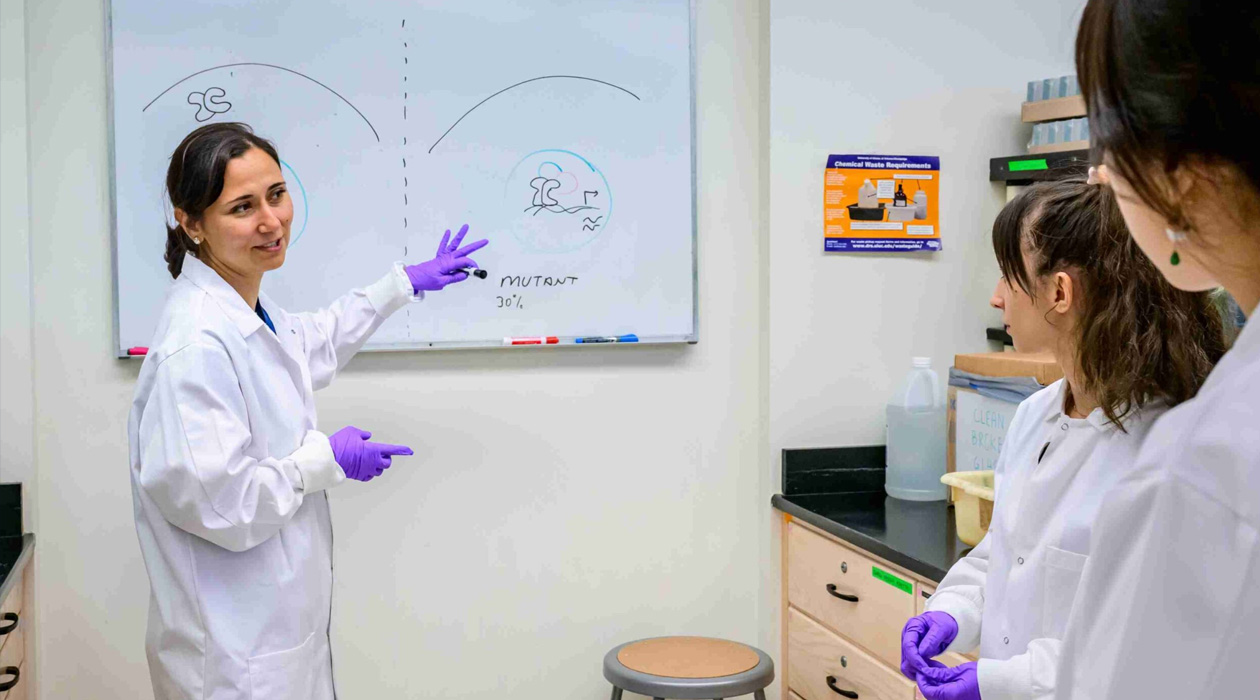
“To have such high-impact work, there should be research teams that include people from different sides of the sciences: cancer expertise, computational expertise, biology, and now AI and analytics tools," said Zeynep Madak-Erdogan, Sylvia D. Stroup Scholar and Professor of Food Science and Human Nutrition / Hailee Munno

Share
Tumors contain many different types of cells organized in complex spatial patterns that can influence how the disease progresses. Because of this, it is hard to predict how a tumor will develop and respond to treatment. Researchers at the University of Illinois Urbana-Champaign are taking a new approach that combines geographic mapping techniques with gene expression analysis to visualize these spatial relationships inside tumors.
Sylvia D. Stroup Scholar and Professor of Food Science and Human Nutrition Zeynep Madak-Erdogan (CGD/EIRH/GSP), the Associate Director for Education at Cancer Center at Illinois (CCIL), collaborated with Illinois researchers, including Carle Illinois College of Medicine, to better understand how tumor cells are organized. Their study, In Silico Reconstruction of Primary and Metastatic Tumor Architecture using Geographic Information System-Augmented Spatial Transcriptomics, introduces a computational framework called GIS-ROTA that helps map biological activity within tumors.
“We are studying tumors and, in this particular paper, breast cancer,” said Aiman Soliman, Senior Research Scientist at the National Center for Supercomputing Applications and CCIL member. “Typically, you might expect spatial scientists to look at maps at the urban scale, but the question came up: why not take the same spatial analysis and apply it within the tumor?”
Jin Young Yoo, a graduate student in the Women’s Health and Metabolism Lab explained, “In this research, we developed an analytic framework for spatial-omics data that incorporates geospatial features to visualize and quantify the spatial relationships between different cell groups within tumors.”
Using this idea, the team developed Geographic Information System-Augmented Spatial Transcriptomics (GIS-ROTA). Instead of first grouping cells using statistical patterns and then trying to determine their biological meaning, the researchers started by looking at known biological pathways and asked where those functions appear within the tumor.
“Although all cells contain the same DNA, what defines tissue function is how genes are expressed and regulated,” said Yoo. “Our method maps the spatial activation of biological pathways, such as metabolism or immune response, rather than just grouping cells by similarity. This gives us clearer insight into tumor function.”
When the researchers applied their framework to estrogen receptor-positive breast cancer samples, they discovered significant spatial patterns.
“In this study, we looked at what changes are happening in the relative localization of the cells when we compare primary tumors with those that metastasize,” Madak-Erdogan said. “We identified different cell types and molecular pathways, which gives us a tool to target these pathways and hopefully make these tumors respond to therapies.”
By mapping where biological pathways are active within tumors, researchers hope to better understand mechanisms such as endocrine resistance that can limit treatment effectiveness in metastatic breast cancer.
“As clinicians, we see every day how endocrine resistance leaves patients with metastatic breast cancer with fewer treatment options,” said Dr. Maria Grosse Perdekamp, Clinical Assistant Professor of oncology at Carle Illinois College of Medicine. “Working with this research team allowed us to dig into the biology behind this problem in a completely new way. Our new approach gave us insights that can only come when the clinic and the lab work together.”
The team hopes this framework will become a useful tool for other researchers studying cancer. Because the method begins with known biological functions, it helps scientists more clearly interpret the development and function of the cells inside of tumors.
“This tool is flexible and biologically intuitive, and it’s not limited to one type of cancer,” Soliman said. “Researchers with different questions can use existing curated molecular libraries to ask where these circuits are mapped in their tissues, leading to new discoveries.”
Madak-Erdogan emphasized that projects like this require collaboration across many scientific disciplines.
“To have such high-impact work, there should be research teams that include people from different sides of the sciences: cancer expertise, computational expertise, biology, and now AI and analytics tools,” Madak-Erdogan said. “That’s quite important.”
***
The paper, “In Silico Reconstruction of Primary and Metastatic Tumor Architecture using Geographic Information System-Augmented Spatial Transcriptomics,” published in Cancer Research, is available here.