Microbiome Metabolic Engineering

The Microbiome Metabolic Engineering theme seeks to understand the positive effects of the microbiome on human health and how harmful environmental factors reduce those effects.

Read More About MME

Featured Stories

	 Illinois is at the forefront of precision fermentation, an emerging technology that can develop tailored food ingredients in the laboratory. Yong-Su Jin leads PreFerS, a research institute based in Singapore that focuses on bringing these engineered foods to market.
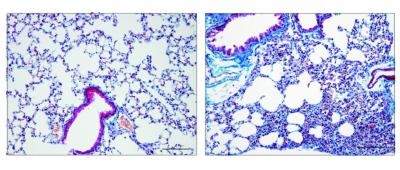
On the left, healthy mouse lung tissue. On the right, corisin-affected lung tissue shows extensive fibrosis. Image courtesy Esteban Gabazza
The biocatalyst developed by Wei's laboratory enables the recovery of phosphate, a vital plant nutrient, from biorefinery wastewater. / Katie Brady
Electron micrographs of bacterial viruses, also known as phages. Photo credit is Hatoum-Aslan lab, University of Illinois Urbana-Champaign.
The University of Illinois and Mie University in Japan have collaborated on several studies of how the biome and its products affect human tissues and disease. Pictured, from left: Illinois researcher Mindy Baughma, Illinois postdoctoral researcher Janaina Cavalcante, Mie researcher Dr. Taro Yasuma, Mie professor Dr. Esteban C. Gabazza, Illinois students Jinyu Guo, Isaiah Lasisi, Sophia Nelson and Rebecca Hess and Illinois professor Isaac Cann. Photo courtesy of Isaac Cann
In a study of neonatal piglets, Illinois pathobiology professors Christopher Gaulke, left, Ying Fang and their colleagues linked influenza A viral infection to alterations of the nasal microbiome and potentially detrimental changes in brain gene expression. Vaccination of pregnant sows appeared to partially protect their offspring from these effects. Photo by Michelle Hassel