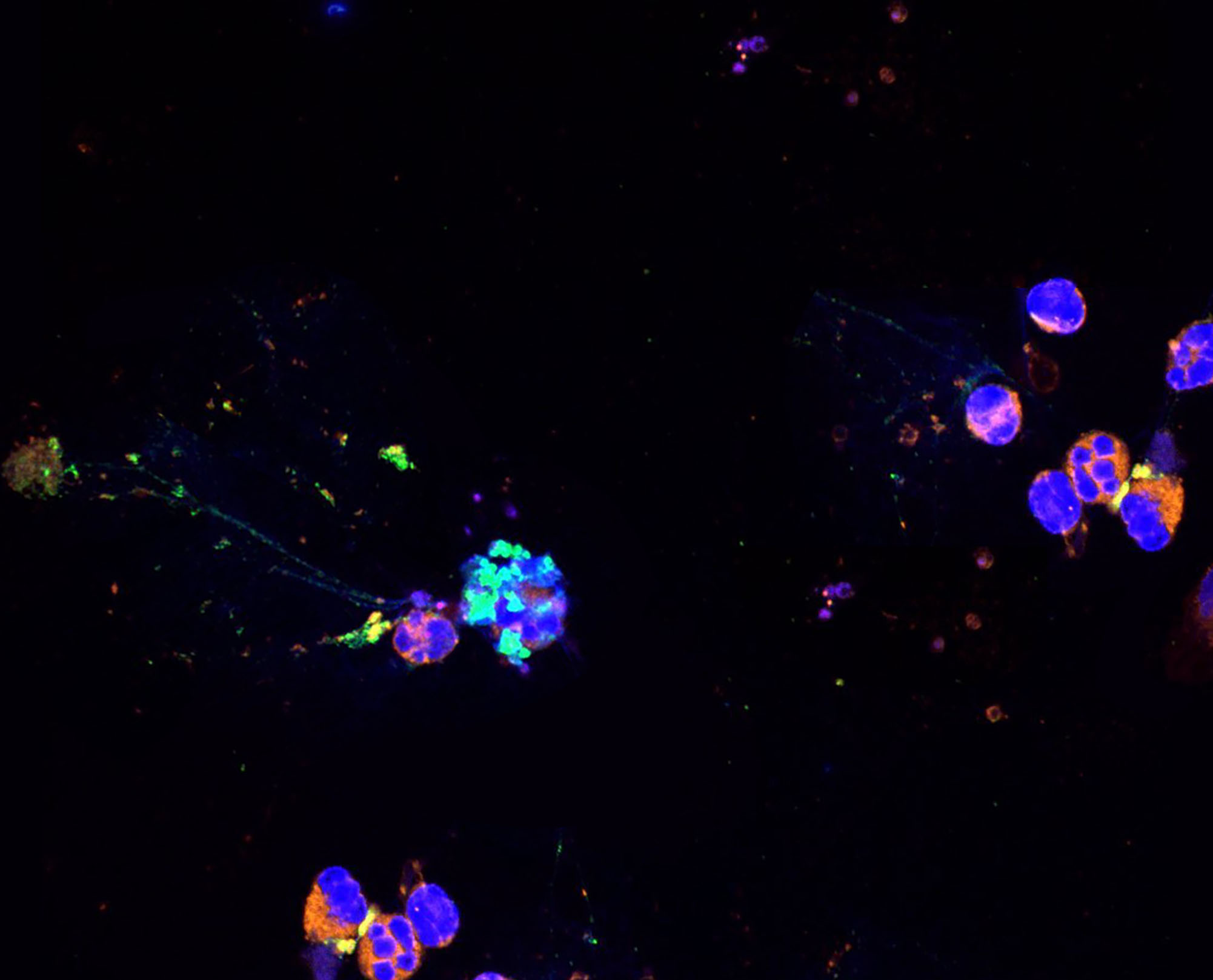


Microbial communities are ubiquitous, including across agricultural, industrial, and natural systems. These communities directly and indirectly impact health and disease for humans, animals, plants, and the environment. Understanding of the movement of genes, genomes, and microbes across these interconnected ecosystems is urgently needed to maintain healthy microbial communities and address critical threats, including antimicrobial resistance and disease transmission. IGOH aims to identify dynamic networks of microbes and genes across changing ecosystems, and to create a framework that can describe and predict microbial interactions and gene movement. This approach can be used to determine factors influencing microbial transmission, resistance, and symbiotic interactions in different environments, populations, and socioecological systems, and to intervene to protect and promote health in all systems and scales.
Recent Publications from IGOH

View full list of publications from IGOH
From Leaders of the Theme
IGOH aims to develop broad predictive frameworks for infection biology to directly address major challenges to health by studying microbial systems within their socio-ecological contexts. IGOH connects academic, community, agricultural, industrial, and political spheres through coordinated application of novel methods, integrating the resulting big data into a predictive systems-framework based on socio-eco-evolutionary principles. To this end, the IGOH theme supports trans-disciplinary collaborations among researchers in ecology, evolution, microbiology, virology, biomedical sciences, agricultural and food sciences, entomology, engineering, anthropology, behavioral sciences, and education.
Together, IGOH researchers harness high-throughput, genome-based methods to quantify the spatial and temporal dynamics of both free-living and host-associated microbes important to human, animal, and plant health. The work extends eco-evolutionary principles across nested hierarchies, analyzing dynamics and interactions at the gene, genome, organismal, population, community, and landscape levels through network and community models. At each level, both within- and between-host microbial dynamics are considered.