


Tracy Lawson wins ISPR Innovation Award
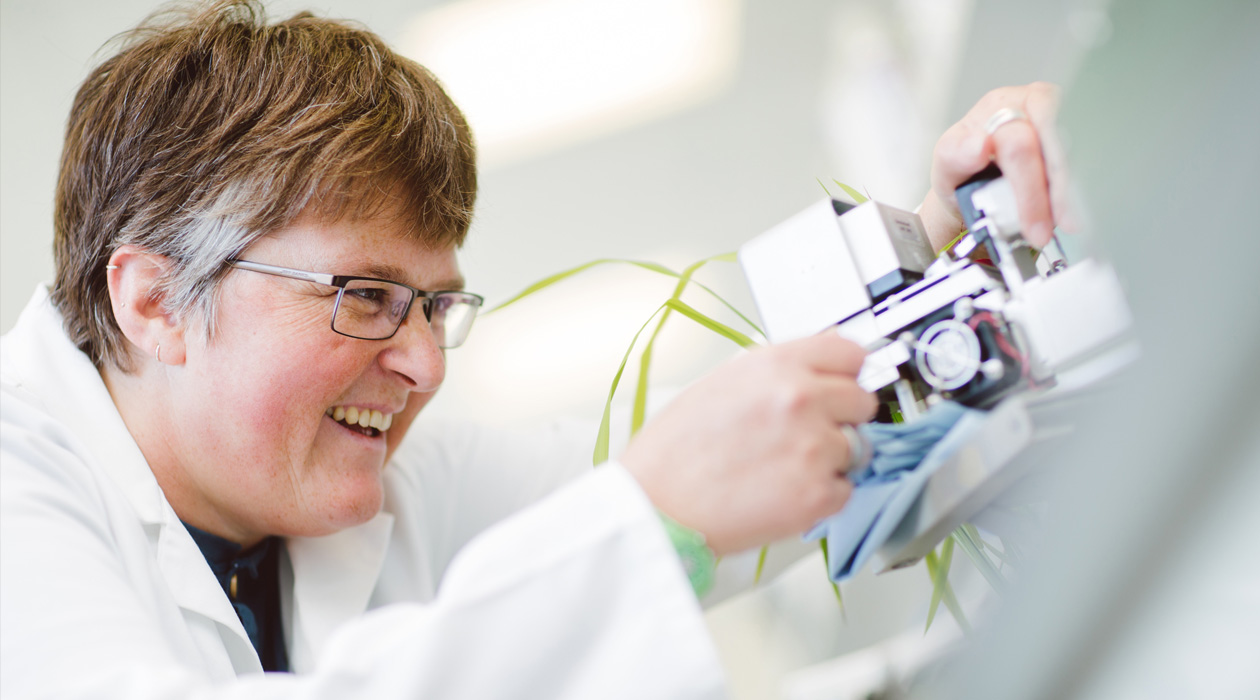
Professor of Plant Biology Tracy Lawson has won the Innovation Award from the International Society on Photosynthesis Research (ISPR) / University of Essex

Share
In recognition of her outstanding achievements in the transfer of photosynthesis research to the benefit of society at large, Professor of Plant Biology Tracy Lawson (PFS co-leader/CAMBERS) at the University of Illinois and the University of Essex, has won the Innovation Award from the International Society on Photosynthesis Research (ISPR). The award was created in 2007 by ISPR to celebrate members who not only expand fundamental scientific understandings of photosynthesis, but also explore practical applications of their research. This award recognizes Lawson's development of several tools for plant phenotyping over the last twenty years that have had widespread impacts in academia and industry.
"Tracy Lawson is an innovator in plant phenotyping and visionary of ideotypes for improved photosynthetic efficiency," said Interim Director of the Carl R. Woese Institute for Genomic Biology, Lisa Ainsworth (CAMBERS/PFS). Ainsworth is also Charles Adlai Ewing Chair of Crop Physiology in the Department of Crop Sciences and the Department of Plant Biology. "From novel gas exchange systems to imaging chlorophyll fluorescence to novel approaches for Controlled Environment Agriculture (CEA), Dr. Lawson has had an outsized influence on how the community measures photosynthesis, which is reflected by this tremendous honor."
Lawson's research focuses on studying stomatal function to improve photosynthesis, water use efficiency, and crop productivity. She and her team have created innovative tools including but not limited to a chlorophyll fluorescence and thermal imaging to measure plant water-use efficiency; a real-time chlorophyll fluorescence feedback system to alter indoor lighting systems for optimal plant growth and energy efficiency; and gas exchange chambers for autonomous measurements of leaf gas fluxes and detection of non-foliar photosynthesis.
"All of these tools have been developed in pursuit of improving crop performance and water use efficiency and therefore have obvious socioeconomic benefits," Lawson said.
In addition to the development of these tools, Lawson's research has culminated in ~200 publications and ~25,000 citations, according to Web of Science and Google Scholar. She has also been on the Clarivate Highly Cited Researchers list since 2020.
Lawson holds several patents and has served as an advisor for multiple companies, including Technologica Ltd. (Colchester, Essex), Chelsea Instruments (London, UK), Gardin Ltd. UK, and Innovation Agri-Tech Group. She was sought for these advisory and consultant roles because of her innovative tools to measure photosynthesis. Lawson's vision for innovation has also brought in millions of dollars of funding from industry to support her research and development of novel tools.
"I am delighted and honored to receive this award, as it is great to see some of the technical innovations from my lab being acknowledged in this way and that they are of benefit to the community," Lawson said.
Lawson is also highly regarded as a collaborator and embraces the spirit of team science.
"Tracy is highly regarded by collaborators and students alike, bringing her tireless enthusiasm and expertise to all the projects she is involved with. She never does anything by half measures, making her an excellent team player and leader," said long-time collaborator of Lawson, Christine Raines, Professor of Biological Sciences at the University of Essex.
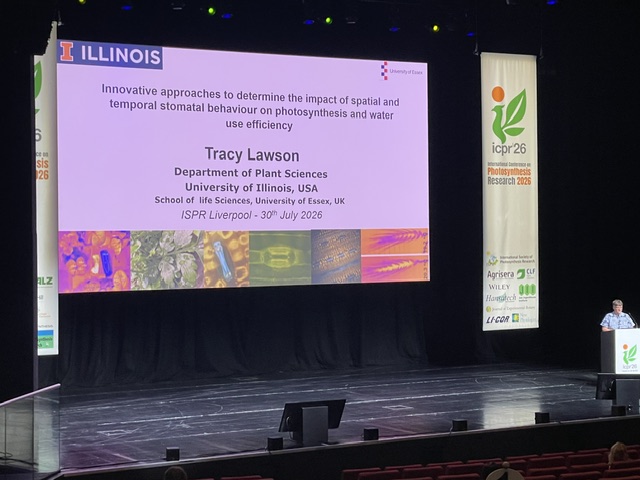
The ISPR Innovation Award is funded by LI-COR Biosciences. Lawson formally received the award on July 30, 2026 during the 2026 International Conference on Photosynthesis Research in Liverpool, UK.
"As always, these awards reflect a team effort and none of this would be possible without the dedicated PhD students,post-docs and technicians in my labs, to whom I am extremely grateful. I am also indebted to all my colleagues for their continued support and collaborations." Lawson said.