


Book describes loss as a central feature of pregnancy
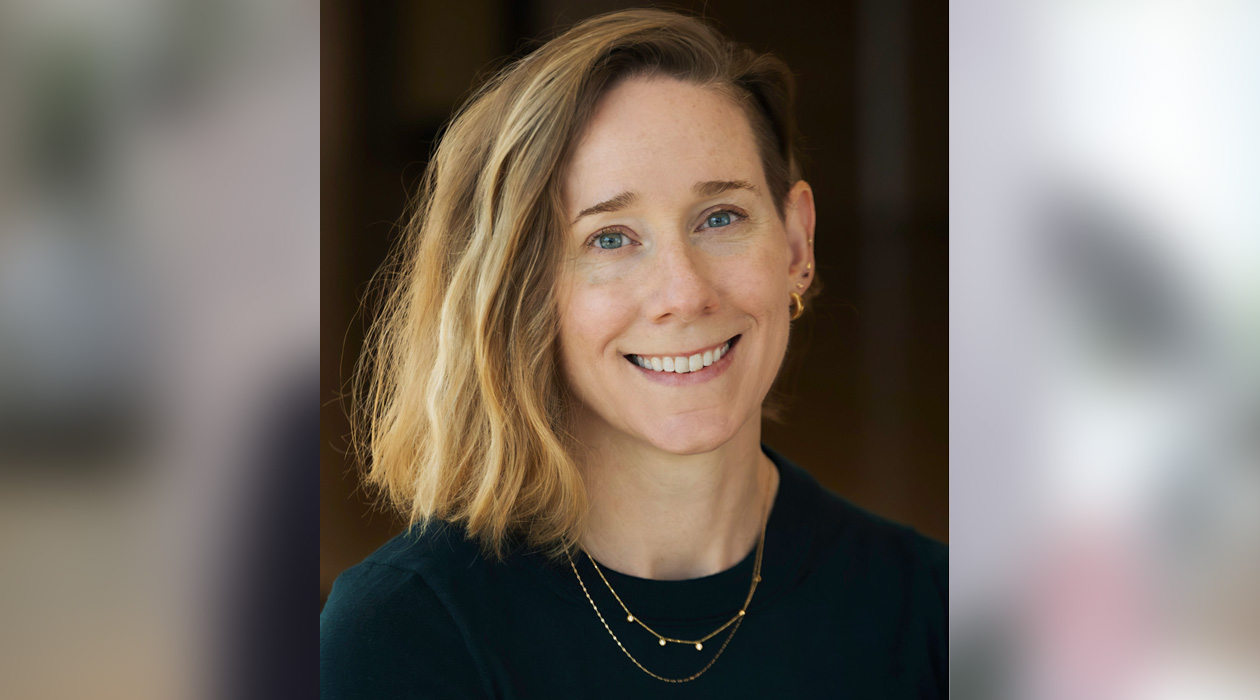
“The process of pregnancy, far from being straightforward or inevitable, is one marked by significant uncertainty,” writes U. of I. anthropology professor Kate Clancy in a new book. / Joanna Strauss

Share
According to a new book from University of Illinois Urbana-Champaign anthropology professor Kate Clancy (EIRH), pregnancy is necessarily fraught, involving a series of tests of egg, embryo and reproductive system viability, with potential losses at every stage.
“Pregnancy Interrupted: The Science and Stories of How Pregnancies Really End,” describes the intricate, trial-and-error process of egg production, fertilization, implantation and growth as a series of precisely timed structural and hormonal events that allow a placenta to form and nurture an embryo as it grows. While this progression is never perfect, the pregnant body and the embryo or fetus must pass certain developmental milestones before they can progress to the next stage.
This testing increases the likelihood that a fetus will be healthy, but it can and does lead to losses at every stage of pregnancy, Clancy writes.
“In the United States, for instance, it’s estimated that there are about 3.6 million babies born a year, 1 million miscarriages, 620,000 abortions and 20,000 stillbirths,” Clancy writes. “These figures fail to take into account the losses … that occur before someone might know they are pregnant, between the moment sperm and egg fuse and any symptoms may be felt. These … account for several million additional losses comprising 30-50 percent of all pregnancies.”
Historically and even today, people tend to view pregnancy losses as tragic failures, the result of bad genetics or bad behavior on the part of a pregnant person, Clancy writes. In the most extreme cases, in places where abortion is criminalized, for example, “miscarriages sometimes trigger the suspicions of state authorities and can lead to arrest, detention, and even criminal charges.” But even in places where the health and welfare of the pregnant person is protected, the stigma of pregnancy loss often causes additional suffering for the parents.
“Worse, abortion restriction laws and a lack of pain management can put those experiencing miscarriage or stillbirth in agony,” she said in an interview.
Clancy argues for a deeper and broader view of pregnancy, one centered on two “fundamental truths.”
“The first is that pregnancy loss, far from being unusual, is central to pregnancy — it is, in fact, the most common outcome,” she writes. The second fundamental truth is that “the process of pregnancy, far from being straightforward or inevitable, is one marked by significant uncertainty.”
Menstruation, the prerequisite to a potential pregnancy, is itself a story of growth and decline, and from the moment an embryo is formed, pregnancy is laced with uncertainty.
These realities are the result of what Clancy calls “the hot mess of mammalian evolution.”
“Our evolutionary history has led us to sexual reproduction, which involves lots of eggs and embryos but few implantations, and interconnected pregnancies with a placenta that must be load-tested before it comes online,” she writes. “We fling a lot at reproduction, then exert incredible discernment in terms of what remains. So this is the system with which we are stuck as humans, one where many eggs and embryos are lost.”
In addition to the complex and messy natural processes of pregnancy, parent and fetus may face a host of other potentially dangerous assaults. These may come in the form of environmental pollutants that can infiltrate the pregnant body of even the most careful parent, or medications that pose unusual risks during pregnancy. The byproducts of food packaging have been shown to affect fetal growth and development. There are also pathogens, some of which might not end a pregnancy but may compromise the health and well-being of the parent or the child. Racism, bias against people with obesity or who are transgender, and physical violence against pregnant people also contribute significantly to morbidity and mortality.
Restrictions on medications associated with — but not exclusive to — abortion care may also be a danger, Clancy said.
“For example, misoprostol is used for abortion, but also to treat miscarriage and to induce labor both for stillbirths and full-term births,” she said. “And when we restrict access to these medicines and treatments, we restrict needed, even lifesaving interventions.”
“What I learned as I researched this book is that there are a variety of pregnancy endings that are inevitable, and a variety that occur from social determinants of health,” Clancy said.
“In raising awareness about pregnancy loss, my hope is that this awareness encourages people to think about how they might want to manage a miscarriage, should it happen; that this awareness empowers people to engage in self-advocacy in the event of a threatened stillbirth; and that this awareness leads to better patient care and, when possible, to giving patients — or clients — the time and space they need to choose how to manage their loss,” she writes.
Clancy also is an affiliate of the Beckman Institute for Advanced Science and Technology and the Carl R. Woese Institute for Genomic Biology at the U. of I.