


IGB faculty receives NSF grant to continue research on phosphate recovery
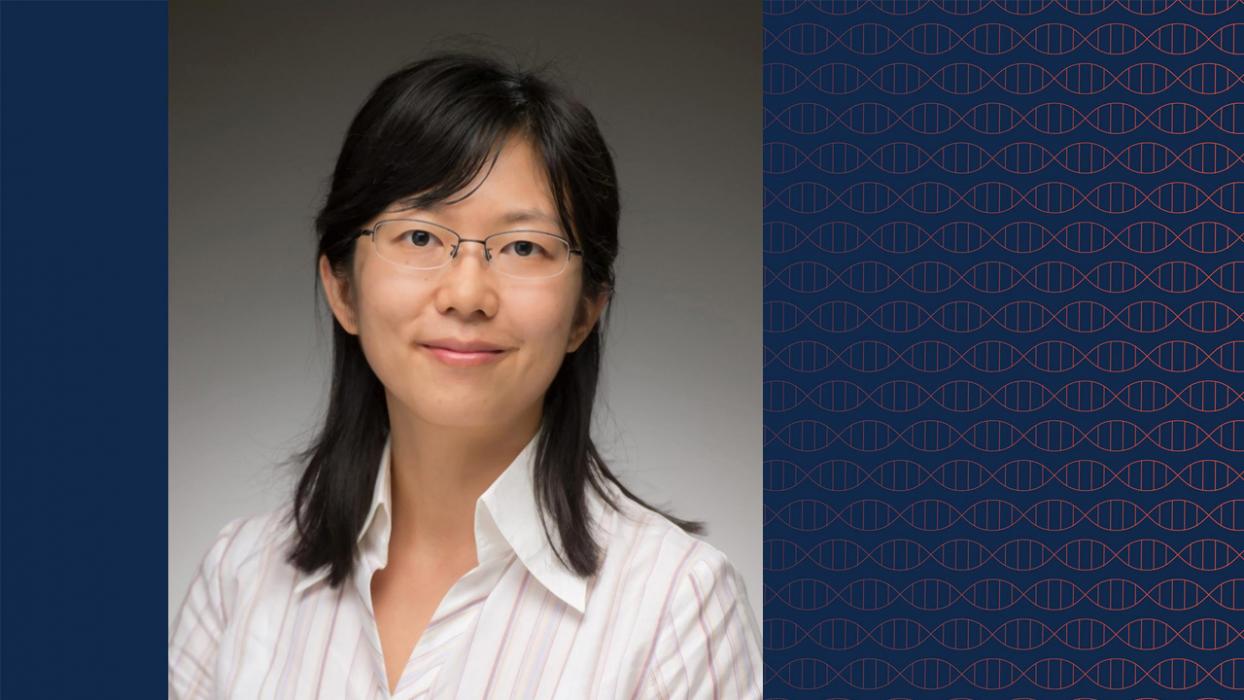
Civil and Environmental Engineering Professor Na Wei is leading a new NSF grant to develop a more sustainable, circular phosphate bioeconomy / Fred Zwicky

Share
Phosphorus is an important plant nutrient whose availability jeopardizes global food security. In plants, phosphorus is involved in a variety of essential functions including root development, flowering, fruiting, energy transfer and stress resistance. Phosphorus is a limited resource, and supplies are threatened by the depletion of mined phosphate rock reserves.
Achieving a sustainable and circular phosphorus economy is crucial for strengthening nutrient resource resilience and protecting freshwater ecosystems. As the bioeconomy grows, biorefinery waste streams are emerging as a valuable, yet largely untapped source for phosphorus recovery. However, a critical barrier for phosphorus recovery from biorefinery waste streams is that the predominant form of phosphorous, phytate, is not bioavailable and requires hydrolysis into phosphate to enable reuse as fertilizer or other phosphorus-rich products.
To overcome these challenges, researchers at the Carl R. Woese Institute for Genomic Biology at the University of Illinois Urbana-Champaign are developing ways to recover phosphorus from biorefinery waste.
The research team, led by Civil and Environmental Engineering Professor Na Wei (BSD/IGOH), has received a grant from the National Science Foundation to develop a more sustainable, circular phosphate bioeconomy. Wei will collaborate with Founder Professor of Agricultural and Biological Engineering Vijay Singh (CAMBERS/PFS) and Dong Wang, the Associate Dean for Research and a professor in the School of Information Sciences.
Earlier this year, Wei and colleagues published a study in the journal Environmental Science & Technology describing a process they developed that efficiently converts a biorefinery waste product called phytate into phosphate, which can then be readily absorbed and used by plants.
“The published work demonstrated the very initial stage of our idea to engineer biocatalysts, like phytase, that convert the phytate to phosphate from biorefinery waste,” Wei said. “This award is building upon that initial study, but we will continue studying how to engineer biocatalysts to be more relevant to real world industrial application scenarios, especially making that biocatalyst more robust.”
The interdisciplinary research team plans to develop an AI-driven bioengineering approach to make phytase more robust so that it works in waste streams as well as it does in controlled lab settings or in clean buffer systems. The team will also produce economical and life cycle analyses to provide the basis for future scale up and translational research in industrial settings.
In addition, the team will work with the Illinois Fermentation and Agricultural Biomanufacturing Hub, or iFAB, to engage with the biorefinery or biotechnology industry and stakeholders to develop technology more suitable for industrial reapplication.
Working with iFAB and Singh, who is also the Director of the Integrated Bioprocessing Research Laboratory, or IBRL, has distinct advantages.
“IBRL’s pilot-scale facilities, combined with iFAB’s strong connections to industry, give us a unique opportunity to evaluate this technology under realistic biorefinery conditions,” Singh said. “By engaging industry partners throughout the project, we can better understand the practical challenges of implementation and design a robust, cost-effective process that can ultimately be scaled for commercial use.”
The researchers expect this project will generate new fundamental knowledge in synthetic biology, AI-driven enzyme engineering, bioprocess engineering and resource recovery while also establishing a scalable route to advance a sustainable phosphorus economy.