


In challenging times, a legacy of mentorship and kindness lives on
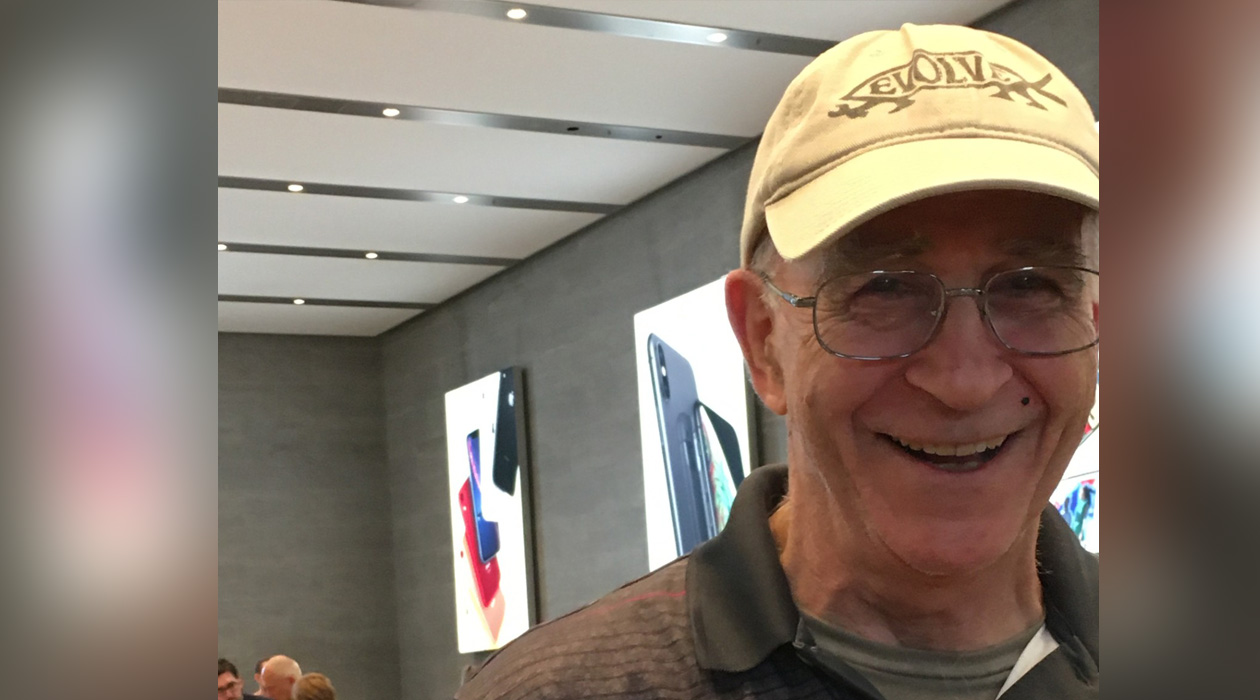
Eric Jakobsson was Professor Emeritus of Biochemistry, Molecular and Integrative Physiology, Biophysics and Computational Biology, Bioengineering, Neuroscience and affiliated with the Beckman Institute of Advanced Science and Technology and the Carl R. Woese Institute for Genomic Biology.

Share
Eric Jakobsson, an integral member of the University of Illinois and Champaign-Urbana communities for 50 years, is remembered for his legacy of kind and thoughtful leadership. Until his death in 2021, he was an intelligent, calm, and seemingly tireless source of ideas and mentorship in every realm of his life: his family, his laboratory group, his city, and the scientific circles he helped to bridge. Now, a gift made by his wife Naomi Jakobsson is continuing his legacy through timely and impactful support to research trainees at the Carl R. Woese Institute for Genomic Biology.
The gift, made in Eric’s name, will enable undergraduate and graduate researchers to engage in full-time research experiences. One student has already embarked on a summer research project that would not otherwise have been possible.
"Eric was so supportive of his graduate students,” Naomi said, explaining her thought process in planning the gift. “He had summer high school students. mentoring them, helping them learn how to do research . . . keeping the next generation of people here and engaged and supported is really important.”
Remembrances of Eric’s academic career invariably highlight both his high level of scientific achievement and his warmth and generosity toward everyone with whom he worked. His capacity for interdisciplinary collaboration is reflected in his numerous affiliations beyond his academic home in the Department of Molecular and Integrative Physiology, including the IGB, the Neuroscience Program, the National Center for Supercomputing Applications, and the Beckman Institute for Advanced Science and Technology. He was adept at encouraging the same curiosity and adventurousness in his mentees.
“I wouldn’t be where I am today without him,” said Sagar Pandit, who worked with Eric as a postdoctoral fellow and is now an associate professor of physics at the University of South Florida. “Over the years, Eric became much more than a collaborator; he was a mentor, a sounding board, and someone I could always count on for thoughtful advice and fresh ideas. He had a quiet but powerful presence, and his impact on my work, and on me personally, has been lasting.”
Zeeshan Fazal, who completed his graduate degree in Eric’s laboratory group, also spoke about the impact of his mentorship. “He saw me not just as a researcher, but as a person with dreams, struggles, and a family—and he embraced all of it with a heart full of generosity,” Fazal, now a computational genomics scientist at the National Institutes of Health, said. “There were times during my Ph.D. when financial stress weighed heavily on me. After a particularly difficult preliminary exam, Dr. Jakobsson told me, ‘You focus on your studies. I will take care of your financial concerns.’ His generosity and empathy during those moments made an indelible impact on my life and the lives of my children.”
Eric also brought curiosity and passion—and compassion—to his life beyond academia. His work ethic and dedication were in evidence in his community involvement, in both his tenure on the Urbana City Council from 2009 to 2020 and, beginning before that, supporting Naomi’s service in the Illinois House of Representatives from behind the scenes.
“When I was in office, I would barely think about something out loud, and he was already doing the research. He would research anything; that is a huge asset,” Naomi said. She described how his capacity for background research and synthesis also strengthened his own work on behalf of Urbana: "a lot of people would tell me, oh, I watched City Council because I loved to hear Eric talk.”
Already living a dual life of public service, Eric did not stint on his life at home with a family of ten.
“He was devoted to his family and to his jobs. We had eight children, six of them adopted,” Naomi said. “Along with his graduate work and studies, he was still there, helping take care of everyone.”
Reflecting on Eric’s many roles reinforces how fitting a remembrance the present support for aspiring science trainees truly is.
“What stood out most was his openness. He never pushed his ideas, but he always listened, and when he did speak, it was with clarity, kindness, and depth,” Pandit said. “Even during his illness, Eric kept working, kept thinking, and kept encouraging others . . . One of our last papers together was published after he passed, and it’s hard to put into words how much that meant. It was a quiet but profound reminder of the kind of dedication he brought to everything he did.”
“He would just spend hours working with a student, helping them, whether they were writing something or working out something,” Naomi said. “He was always a real humanitarian.”