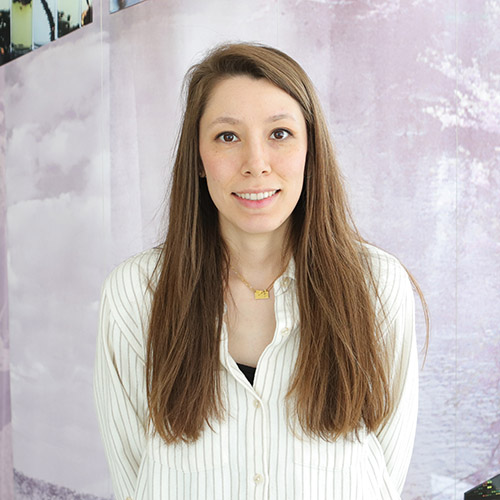


Katrina Claw, PhD (Diné)
- Biography
-
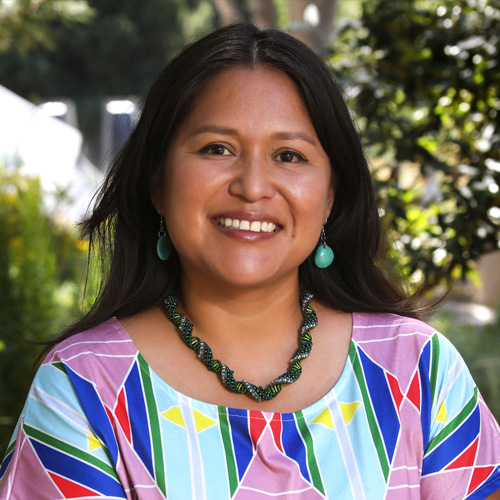
Yá’át’ééh (Hello)! Dr. Katrina Claw, is an Associate Professor at the University of Colorado (CU) in the Department of Biomedical Informatics in Aurora, CO. She is faculty in the Colorado Center for Personalized Medicine and for the Human Medical Genetics and Genomics Program at CU Anschutz. Dr. Claw received her PhD in Genome Sciences at the University of Washington. She continued as a postdoctoral research fellow at the University of Washington in the Departments of Pharmaceutics and Bioethics. She primarily worked with the Northwest Alaska Pharmacogenomics Research Network, a center devoted to conducting community-engaged pharmacogenomic research with American Indian and Alaska Native communities and was awarded both the Ford Foundation Postdoctoral Fellowship and the Ruth L. Kirschstein National Research Service Award (NRSA F32).
Dr. Claw joined the University of Colorado School of Medicine faculty in August 2019. Her research program focuses on pharmacogenomics and the cultural, ethical, legal, and social (CELSI) implications of genomic research with American Indian/Alaska Native and other Indigenous communities. Dr. Claw’s current research focuses on characterizing pharmacogenomic variation (cytochrome P450 enzymes), tobacco cessation and nicotine metabolism, and examining the perspectives of genetic research in Native American communities. Select publications include: A Framework for Enhancing Ethical Genomic Research with Indigenous Communities; Implementing community-engaged pharmacogenomics in Indigenous communities; and P450Pharmacogenomics in Indigenous North American Populations. Her research has been funded by the National Institutes of Health (NIH) and National Science Foundation (NSF).
In recognition of Dr. Claw’s research in pharmacogenomics, she was awarded the 2024 Alan T. Waterman Award by the NSF. Throughout her career, she has mentored and taught many Native American students, is a long-time instructor and mentor for Summer internship for INdigenous peoples in Genomics (SING), and is now the director of the Precision health and genomics: Indigenous Mentoring and Ethics (PrIME) program.
She grew up on the Navajo Nation and is an enrolled member of the Navajo (Diné) tribe. In her spare time, she tries to keep up with her busy soon to be 4-year-old son, and she enjoys hiking the Colorado foothills and mountains, visiting her family in in the Southwest, reading science fiction and fantasy books, and participating in Native cultural events in the Denver area and back home. Ahéhee’ (thank you).
- Video - Indigenizing Pharmacogenomics and Biomedical Research
-
- An Interview with Dr. Claw
-
In 2023, anthropology graduate students Joshua Diaz and Sahara Vilchis sat down for an interview with Dr. Claw. Read on to learn more about Dr. Claw’s research, how and why she became a scientist, and her favorite parts about her work.
Joshua Diaz:
Hi. So, if you could start by introducing yourself and then just talking a little bit about who you are as a person.
Katrina Claw:
I’m Katrina Claw. I’m an assistant professor at University of Colorado, Anschutz Medical Campus. I’m in the department of Biomedical Informatics, and also faculty in the Colorado Center for Personalized Medicine. I’ve been there for about three and a half years now. For my tribal membership, I’m Diné, or of the Navajo Nation. I grew up on the Navajo Nation. My whole family’s still there in Arizona. And [I] did a lot of work in Seattle, Washington before coming to Colorado. But yeah, my background training is in Genome Sciences. So, a lot of evolutionary genetics and genomics work, and also in pharmacogenomics, and more recently in bioethics and qualitative research. So that’s what my research program does now.
Joshua Diaz:
You kind of touched on this second question that we have for you. When did you first become interested in your area of research?
Katrina Claw:
I guess I was a postdoc because I had never heard of pharmacogenomics until I was nearing the end of [graduate] school. But I was really motivated by this network, or it was kind of like a center on campus. There were two centers actually. The Center for Genomics and Health Equity and the Northwest Alaska Pharmacogenomics Research Network. I had two postdoctoral advisors, one who was the director of each of those centers, and one was really bioethics focused. The other was more pharmacogenomics, pharmaceutics focused. So, it was really the meshing of those two individuals that inspired me to go down this path. I didn’t realize you could do community-engaged research in genomics in a high-quality way. And so that really inspired me to start my own research program that incorporated those different aspects. And, like I mentioned during my talk, the interactions with Native communities, I started realizing that tribal communities had a lot of concerns [about genomics research]. And there were all these issues that I hadn’t really thought about a lot such as data sharing, what happens to the data in the future, what happens to the biospecimens that are collected, and how does a tribe exert oversight over these studies that are often happening in large universities who have like intellectual property laws. And so, a lot of these concerns didn’t come up until I was actually interacting with communities. And that’s where the bioethics focus came, and the training in qualitative research methodologies as well as quantitative research methodologies, a mixed-methods approach. So, that was born from all of these concerns and issues. I needed a way to address them, and in an empirical way, in many of the communities that I was working in. So yeah, that’s how my research program was born. But I think there’s a lot of interactions between both sides. And for every project, I have to consider both sides.
Sahara Vilchis:
What was your graduate research?
Katrina Claw:
It was in evolutionary genetics. I worked with Dr. Willie Swanson. He did a lot of reproductive protein evolution. I looked at non-human primates, and a couple of humans, [and] evolution in reproductive protein. We did mass [spectrometry] and proteomics, as well as combining the evolutionary genomics and selection methods to look at evolution, or reproductive protein, so sperm-egg fusion, and mostly from the male side. So, while I was able to study the evolution of these proteins, which was fun and interesting, I didn’t see the connection to my community.
Joshua Diaz:
I think that’s a conversation that comes up a lot when we talk about community engagement. It’s interesting that for Western academia, it’s this new, like, almost novelty thing, like it’s just never been talked about. And I think it’s easy to get caught up [in that], right? Like being in higher education institutions, it’s easy to be caught up, like, “This is how it’s been done. Therefore, we follow this.” And then like, I think, or at least for me, I’m seeing a lot more of a shift in multiple fields going to more community engagement when it’s like unfortunately, that should have been the first step. But it’s not. But I know that conversation comes up a lot. So that’s interesting that the conversations came up in your postdoc. You know, and luckily, we’ve lucked out having someone like Ripan who’s had that from the get-go.
Katrina Claw:
Yeah. It was intentional on my part to not do community-engaged research as a grad student because it’s so hard and it takes a long time. And I wanted to graduate in a reasonable amount of time. So, I decided to wait on doing that type of research until I had had the training that I lacked in that aspect. I agree that it’s not a new thing, community based participatory research. CBPR is like, very well-known and has been for decades. I just don’t think it has been employed in genomic research as much. And I see that changing also.
Joshua Diaz:
With all of your experience and the knowledge you’ve gained, what is your current role as a researcher? So, what are you interested in right now?
Katrina Claw:
Yeah, too many things. As a researcher, I have a variety of different projects. I’m really interested in looking at overall pharmacogene variation in different communities. I’m interested in-and this goes back to my graduate school training-like, what is the evolution of pharmacogenes? And how does that relate to our environment and different lifestyles? And how does it relate to other species, well, the cytochrome P450 (CYP450) genes are in every, almost every species, but you have some that have many of these genes. Humans have 57. I just learned the honeybee has 15 CYP450 genes. So, why is there that difference? And how have evolutionary changes played a role? Are there any selective or adaptive advantages to the evolution of these CYP450 genes? So, I’m still interested in that, but also interested in bringing pharmacogenomics to Indigenous communities.
So, if you have a specific variant, and there’s clinical functional data that says, “Oh, you’re a slow metabolizer, and you should not be prescribed this medication,” it’s very easy to make that clinical link. Unfortunately, a lot of Native people aren’t involved in the studies. And all of these variants that have been functionally validated have been validated in non-Native populations. Does this variant do the same thing as it does in this population? Or are there other considerations? Or are there other variants that we don’t even know about in these genes? That is the big research focus, making sure we are able to characterize variation and link that to the clinical implementation. But, like I said, clinical implementation is also like super hard, because a lot of the work to actually put pharmacogenomic variants into your electronic health record is like a whole science in itself and often only happens at these big universities that have huge research programs that can do that. If you are working in a tribal clinic, that’s not going to happen. There’s a lot of bureaucracy. How do we make this accessible to clinicians at that level? And then I think another big component is making sure that clinicians know what to do with that information. So, a lot of education on that aspect as well. That’s what I’m excited about and what I’m trying to do in my research program. The other side of it is making sure that we incorporate ethical training and approaches to working with communities as well. Also the whole Indigenous science aspect. This is something that I’m still trying to work out, is how do I incorporate Indigenous knowledge and science into my research protocols and the way I approach science? And how can I really highlight that and make it more accessible to others? So those are some things I’ve been thinking about that I’m excited to pursue.
Joshua Diaz:
You kind of touched on it a little bit, but do you have like, a part of your research that’s your favorite? That like, there’s just like, something that no matter how many times you do it, never get tired of it?
Katrina Claw:
Let’s see. Definitely not pipetting. I get tired of that. Something that I don’t get tired of? That’s a hard question. I’m motivated about certain things. One of my favorite projects is working with my tribe just because it brings me back to my home community. I’m a Navajo tribal member so a lot of the things that we talk about are directly related to me and my family. That is always motivating. It does get complicated, but I always have the opportunity to learn. And it’s because I learn as much from my community partners there as they learn from me. A lot of them speak in the Navajo language and I’m super fortunate to just sit in on meetings where everything’s conducted in Navajo. That’s very different than the academic atmosphere at most research universities…just being able to discuss science in your own language is really cool. And also, to learn from your elders. Like I never knew really what the [Navajo] word was for DNA (iiná bitł’óól). I never knew the word for researcher. I’m forgetting it now, but I learned it. And just the way to describe things in Navajo. So, I’m constantly learning during our meetings and learning more about the people too. What are their concerns? And with this partnership that I’ve been a part of, a lot of them, we were just people who had mutual interests at the beginning. And now five years later, we’re buddies and we’re family and we support each other. So, I think that’s the fun part of the research. And I don’t know if I’ll get tired of it. But right now, I haven’t. And it’s been a motivating thing in my life right now.
Joshua Diaz:
That’s very cool to have an entire meeting [in Navajo]. I think that’s really cool.
Katrina Claw:
Not the entire, but certain sections. Yeah. I never thought I would be able to do this. As a grad student, did I imagine I would be sitting across from an elder talking about genomics? No. I never thought that was possible. But I was in the right place, at the right time, and the right people were around me, and it just all aligned. And before COVID, I was going home five times a year for research trips and driving all over the rez to present at a community meeting or trying to interview someone. It was funny, I got lost a couple times. [I was told] “oh, yeah, you turn at the big bush and the big tree and we’re the yellow house with the blue door.” And yeah, I was not good at that aspect. Can you just give me the Google pin?
Joshua Diaz:
Yeah, I think coordinates would be easier at this point. Okay. So, our next question is, do you have any advice for young Indigenous people interested in science or science-related fields?
Katrina Claw:
Advice? Try to love what you do. I know it’s hard to like something all the time. But I think that if you’re trying to pursue a PhD or a degree that you should at least like what you’re doing. And that helps you get through the tough points in your career, because there will always be tough points and [times] when you don’t think you’ll finish. But if you like what you’re doing, I think that that helps with things.
And then also just acknowledging that we’re in very privileged positions here. I often think back. My dad was a heavy equipment operator my whole life. And he would always come home, and he would drive two hours to work, and then drive two hours back every day and work eight hours or 10 hours a day. But he would always tell me, “don’t get a dirty job. Get a job where you can sit in the office.” And now he has hearing problems because of all the equipment he’s been around. And I see myself, my job is to think and to write and to talk to people about these cool, different ideas. I’m in a very privileged position right now, and that a lot of my community members aren’t often in this position. Think about that role that you play and you’re a role model for everyone in your community. And even if they don’t tell you face-to-face that you are being looked up to, to hold that with you.
Also, I think acknowledging that the reason why we’re here is because our ancestors wanted us to be here. Even though you might have troubles in, I don’t know, certain courses or anything, just being here, that’s what our ancestors wanted. They wanted us to have a seat at the table. And they wanted us to determine research directions. They wanted us to help our community in whatever capacity. And all those people are still a part of us. If you want to bring in the DNA aspect, their DNA is a part of us now. Remembering that your ancestor[s are] still with you, and that you’re a part of their aspirations for the future.
Sahara Vilchis:
Do you remember the first time you felt community in academia? Because I know that in some cases, we don’t always feel that that sense of community and I know we’re really privileged to have each other.
Katrina Claw:
Yeah, definitely. There was someone who joined my program, and they were also Indigenous. And then we met another Indigenous person and we all were, like, nerds about genomics. We started our own little journal club. And would tell each other about these papers. It was the first time that it was a really cool community. And then I started reaching out to other organizations on campus. So SACNAS (Society for the Advancement of Chicanos/Hispanics and Native Americans in Science), when I was a grad student, was really great. The local chapter. It was very supportive of all people of color and a lot of Native people, but also other ethnicities. They were my saviors, because I had those people and I had the community and family. But I did have to reach out to other groups, like the local urban Native community to make sure I had connections there and not just the academics. I helped tutor with a Native urban youth program as a grad student. Those were all super important for me to have and I think that’s really where the community feel came into play.
Now, as a faculty, I’m still looking for that community. I think my community has become more spread out. And I still feel that when, if I visit here, I feel like that community with certain people. And now you can do it over Zoom. But yeah, I think that that was probably the first and most impactful community feeling that I had. Just having someone else in my department who looked like me and experienced the same things. And then having a larger university group that I could connect with. I think it’s super important. And I had never had a Native PI [Principal Investigator]. So, I still don’t know how that would feel. But I try to make the experience for my own students as comfortable and welcoming as I can make it. I keep sage in my office. And occasionally I tell folks to “take it and use it and just make it your own.”
Joshua Diaz:
As an Indigenous scholar, how does your methodology differ from non-Indigenous researchers in your field?
Katrina Claw:
I think the way I initially approach research studies is very different. All of my projects are community-engaged. So, most folks in my field, use publicly available data or don’t collect samples like I do. I make sure that I form relationships with the community before I start a research study. And that sometimes takes years. I think that’s the main difference. In terms of methodology, like sequencing and different things, I’m thinking about ways I can indigenize that a bit more and the way I approach things in the lab. That’s something that I want to do in the future. The other aspect, the community engagement aspect, sometimes I’ll take on research projects that are outside of my field, like assessment surveys, or things like that that I work with collaborators to make sure that we can do that. And so far, I think every project has been something that I felt comfortable focusing on. But I don’t know, if a tribe wanted to do cancer research, which I don’t do, maybe I can connect them with some of those researchers.
Joshua Diaz:
Yeah, I think that’s one of the really cool things right now is that the conversations are happening. So, there’s not a concrete answer, but there’s flexibility and engagement, and, I think, collaboration where you do have the opportunity to work side-by-side, and not more of a, “tell me your concerns, I’ll think about them, and then I’ll come back,” you know what I mean? Which I’ve seen some researchers do, where it’s like, we talk, and then I deliberate with myself and other researchers and not the community, and then I come back and present it. And that always, to me, was kind of defeating the purpose. But I think it’s interesting that we’re just in a position where we can develop those protocols now. And of course, they’ll change, right? I mean, ethics changes all the time. But to see it happening in real time is really cool.
Katrina Claw:
Yeah. And I think it also is very different each relationship you approach because I have some tribal partners that don’t want to have those in-depth deliberations. They’re like, “no, this is our process. You submit this and we check it off, and you do your thing, and we’ll do our thing.” Sometimes it’s a burden, like, we don’t want to burden the folks that we’re engaging with. So, you take it as far as they want, or they prefer. Definitely each engagement is very different from each other depending on what the community prefers or their oversight processes in place.
Joshua Diaz:
So, the last question is, do you see the benefits of indigenizing your field? And what those benefits look like and how you-and potentially other Indigenous people-can participate in your fields?
Katrina Claw:
Yeah, yeah, I definitely see the benefits of indigenizing it. Not only indigenizing the people doing the research, but also who’s included in the research. That would be great.
Joshua Diaz:
Well, I was going to say, you were talking about the larger research institutions developing basically a large portion of research in your field, but they were using non-Native samples, correct, like reference samples, correct? So, I think like, that alone, right, is a method of indigenizing it. I think that’s the thing, a lot of researchers, non-Native researchers, [26:07] understand, is that their findings directly impact our communities. And so, for that to not be a part of the conversation is interesting to me. I don’t know. I think it’s just kind of like, my default thought process is like, why didn’t you to begin with, you know? So, it’s interesting.
Katrina Claw:
Yeah. It seems like a lot of work to do this. And it is, but it’s also, if it becomes more standardized to think about including diverse populations and genomics, and if there are repercussions if you don’t, then people have motivations for doing that type of research. So, there’s a lot of work that institutions need to do, as well as funders, and journals that can all increase the presence of Native folks but also increase ethical frameworks being used in research approaches. So now I’m really glad to see a lot of the journals including a community engagement statement, whereas 10 years ago, they wouldn’t have required that. And then there are also more Indigenous scientists so that we can review papers and provide our feedback. And sometimes we’re listened to.
Joshua Diaz:
Well, that was all the questions. Thank you for doing this. We greatly appreciate it.